


Photo Optics
Photo optics use light to detect the presence or absence of an object. When an obstruction interrupts the beam of light and reception is blocked, the system sends a signal to motor controls to stop and/or reverse motion.
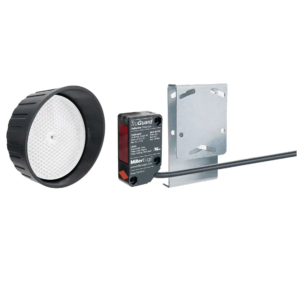
Photo eyes are commonly used to guard the entrapment zones around commercial motorized doors, automated vehicular gates, and in industrial automation and manufacturing. They can also be used for elevator doors and counting.
The Miller Edge photo optics collection includes single-beam photo optics utilizing one beam of light and light curtains offering multiple beams of light to guard a greater vertical range.
Technology
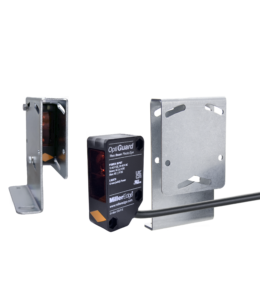
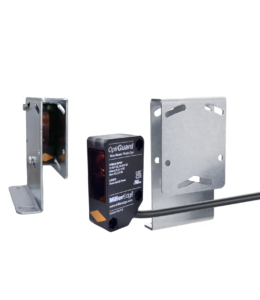
Thru-beam technology utilizes an emitter and a receiver. Mounted opposite of each other, the sending unit emits an infrared beam of light, which is received by the receiver. A retro-reflective system houses both the light emitter and receiver in one unit. A beam of light is emitted to a retro-reflector and bounced back to be received by the emitter/receiver unit.
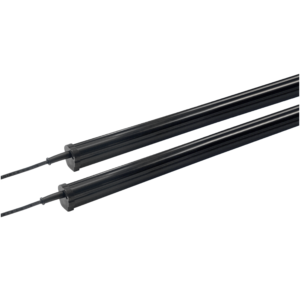
Monitored Light Curtain
MLC
Beams
8 (36-in. model)
16 {72-in. model)
Range
8–32 ft.
(2–10 m)
Technology
Thru-Beam
Configuration
Monitored
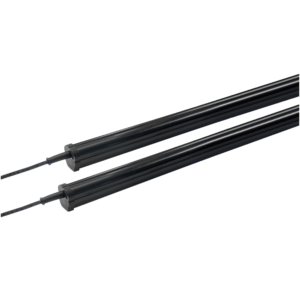
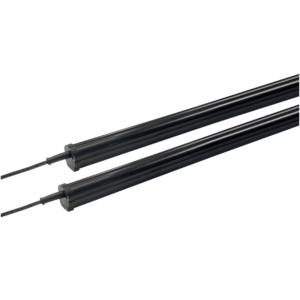
Relay Light Curtain
RLC
Beams
8 (36-in. model)
16 {72-in. model)
Range
8–32 ft.
(2–10 m)
Technology
Thru-Beam
Configuration
Monitored
Photo Optic Accessories
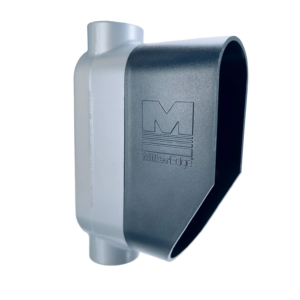
Photo Eye Conduit Enclosure Kit
PE-CON-K10
Technology
Compatible with TruGuard and OptiGuard photo eyes.
Configuration
Fits 3/4″ conduit.
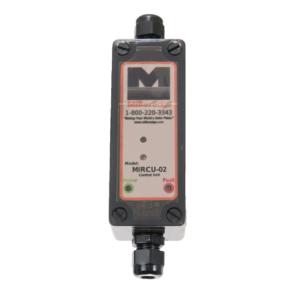
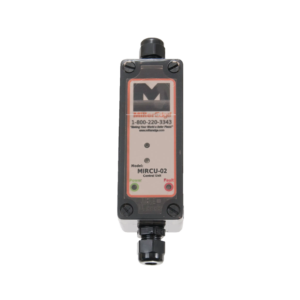
Infra-Red Control Unit
MIRCU-02
Technology
Converts a monitored photo optics signal to non-monitored
Configuration
Non-Monitored
Technology
Configuration
Questions? Contact us today for more information about safeguarding solutions.