

How Safety Edge Sensors Work and How to Install Them on Automated Doors
Automated doors are designed to improve efficiency, security and convenience in commercial and industrial environments. But with moving equipment comes the need for reliable, safe systems that help protect people, vehicles and property from accidental contact.
Safety edge sensors play a major role in that protection. Installed along the leading edge of automated doors, these pressure-sensitive devices detect obstructions and immediately signal the operator to stop or reverse motion.
At Miller Edge, sensing edge technology has been a core part of automated door safety solutions for decades. Products like the MC22 and MC22-C7 are designed to support safe operation while simplifying installation and long-term performance.
What Is a Safety Edge Sensor?
A safety edge sensor, also called a sensing edge, is a touch-sensitive device mounted on a moving door, gate or machine. When the edge contacts an obstruction, it triggers a signal that tells the motor control system to stop or reverse.
These devices are commonly installed on:
- Rolling steel doors
- Commercial sectional doors
- Rolling grilles
- Counter shutters
- Automated gates
- Conveyor systems
- Material handling equipment
- Industrial machinery
Safety edge sensors are especially important in areas with heavy pedestrian traffic, forklifts, loading operations or automated workflows where accidental contact can occur.
How Safety Edge Sensors Work
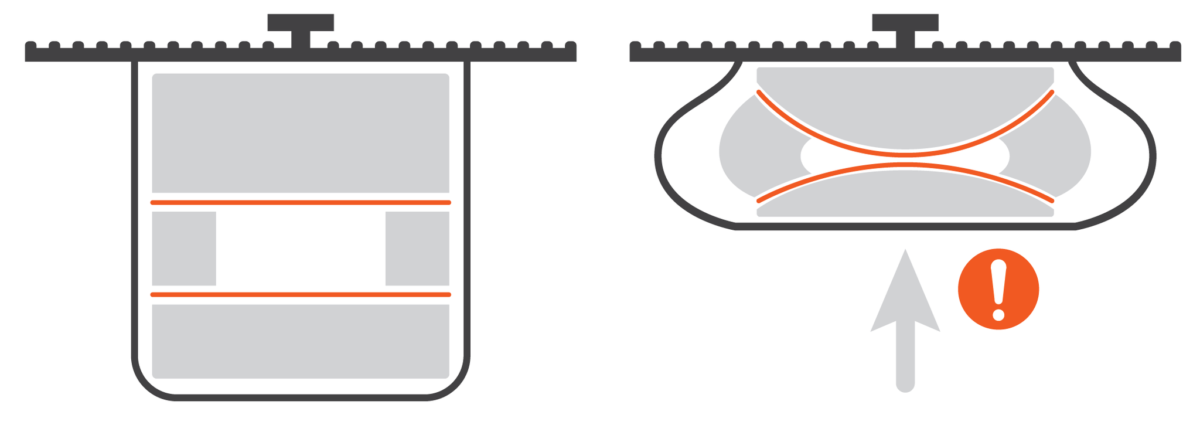
Most electrically activated sensing edges operate using a normally open electrical configuration. Inside the flexible exterior are conductive contact elements that are separated until the sensing edge is compressed.
The Basic Operating Process
Safety edge sensors work through a simple but highly effective sequence:
- As the automated door closes, the sensing edge is in its normal state, with the conductive elements within the edge remaining separated.
- If the door encounters a person, pallet, vehicle or other obstruction, the flexible edge compresses upon contact.
- That compression causes the internal conductive elements to touch, completing an electrical circuit.
- The control system immediately receives the signal and responds by stopping or reversing the door’s motion to help reduce the risk of injury or damage.
Because the sensing edge travels with the leading edge of the door and is not fixed in a single position in the opening, it provides dependable entrapment protection in applications where photo eyes or other sensors may not fully cover the hazard zone.
Understanding Monitored Safety Edges
Modern commercial door systems often require monitored safety devices to comply with current safety standards.
What Does “Monitored” Mean?
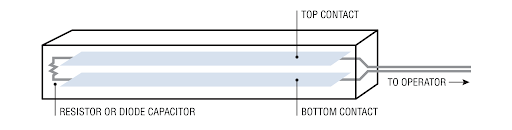
A monitored sensing edge continuously communicates with the door operator, allowing the control system to verify that the safety device is connected and functioning properly.
If the operator detects a fault, damaged wire or loss of continuity, it can prevent the door from automatically operating until the issue is corrected.
This additional layer of monitoring helps reduce risks caused by:
- Damaged wiring
- Failed sensors
- Disconnected edges
- Electrical faults
- Wear over time
Monitored sensing edges use configurations such as:
2-Wire Monitored Sensing Edges
4-Wire Fail-Safe Sensing Edges
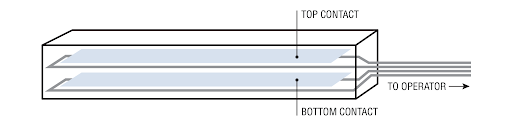
The required configuration depends on the operator manufacturer and control system specifications.
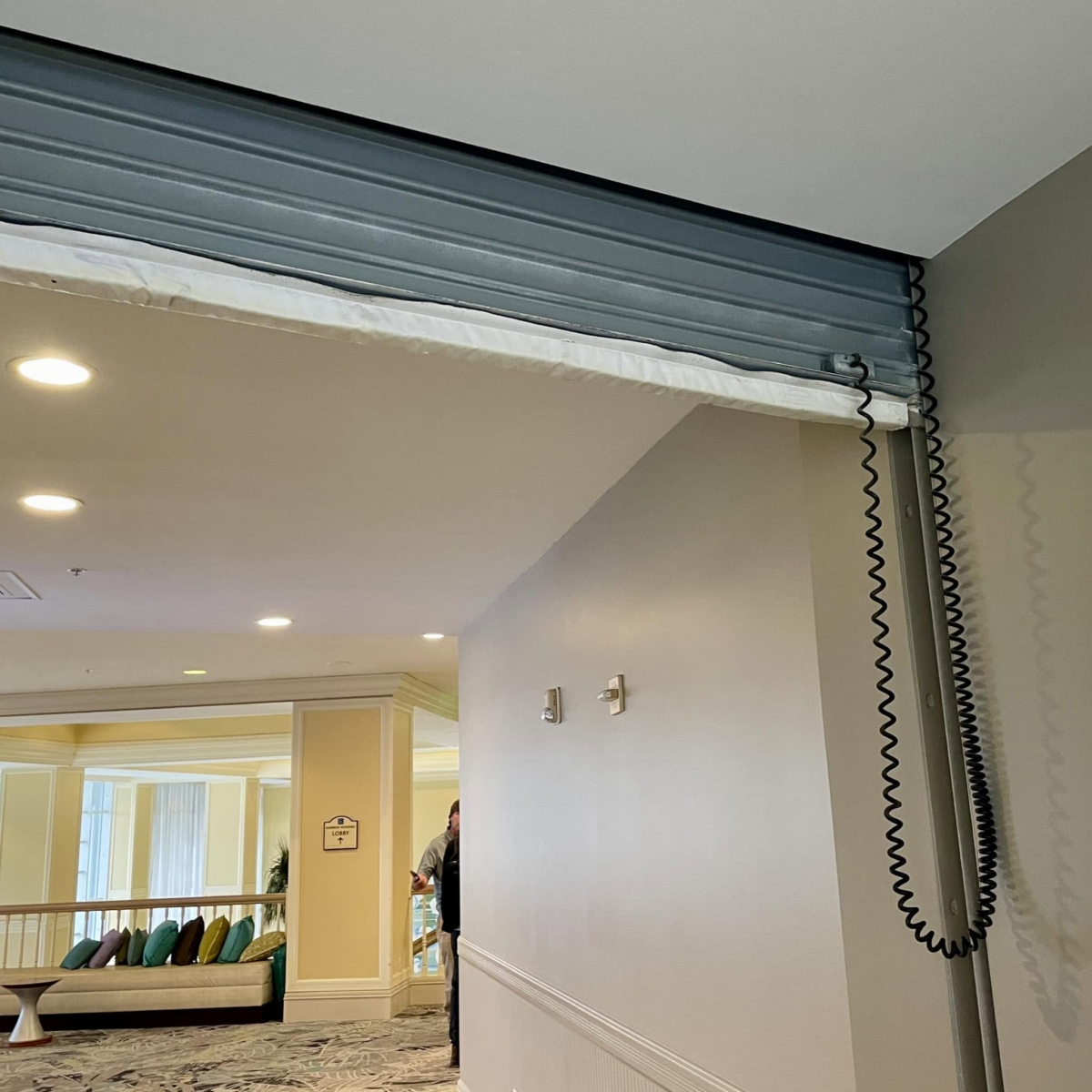
Common Types of Sensing Edges for Automated Doors
Different door styles require different edge profiles and mounting methods.
Sensing Edges for Rolling Doors
Extruded Aluminum Bottom Bars
Extruded aluminum bottom bars with a flat bottom profile require a mounting channel to be installed for sensing edge compatibility. Extruded aluminum bottom bars can also have a built-in retainer designed for direct installation of a sensing edge.
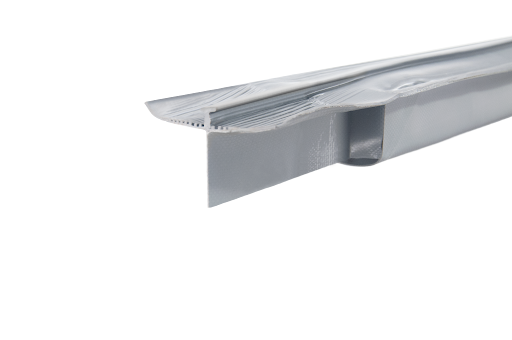
The MC22 is an example of a sensing edge engineered for commercial and industrial rolling doors. It features a flexible vinyl exterior and an extruded T-profile that slides directly into compatible extruded aluminum bottom bars.
Double-Angle Bottom Bars
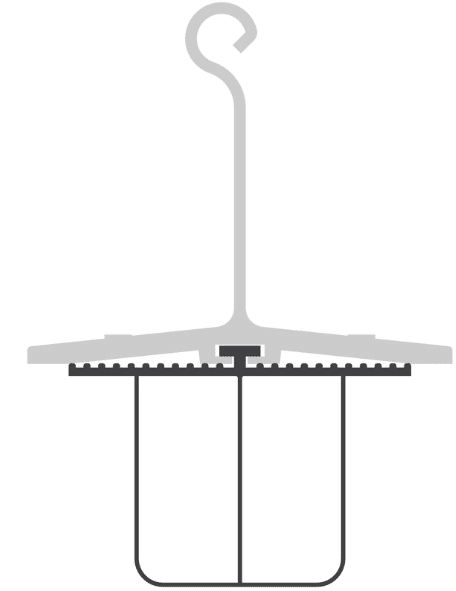
Rolling doors can also utilize double-angle bottom bars instead of extruded aluminum designs. In these applications, mounting channels greatly help simplify installation.
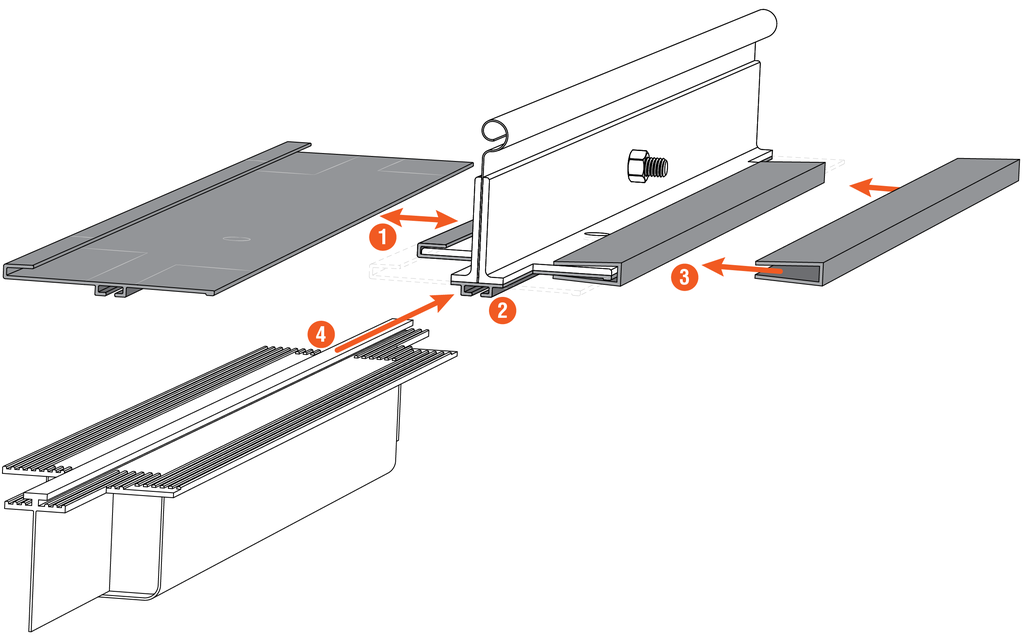
The MC22-C7 was designed specifically for rolling steel doors with 2-inch double-angle bottom bars. Alternative solutions require the disassembly of the bottom bar to install the sensing edge. The MC22-C7 allows for complete installation of the MC22 sensing edge without having to disassemble the bottom bar. This greatly reduces installation time and complexity.
Sensing Edges for Sectional Doors
For sectional door applications, sensing edges are designed to mount directly to the bottom of the door panel, either by sliding into the existing bottom retainer (replacing the weather seal) or by installing a compatible mounting channel when needed. Many Miller Edge profiles use a T‑style or double‑T design that allows quick installation and secure retention, while still permitting flexibility to conform to uneven floor surfaces.
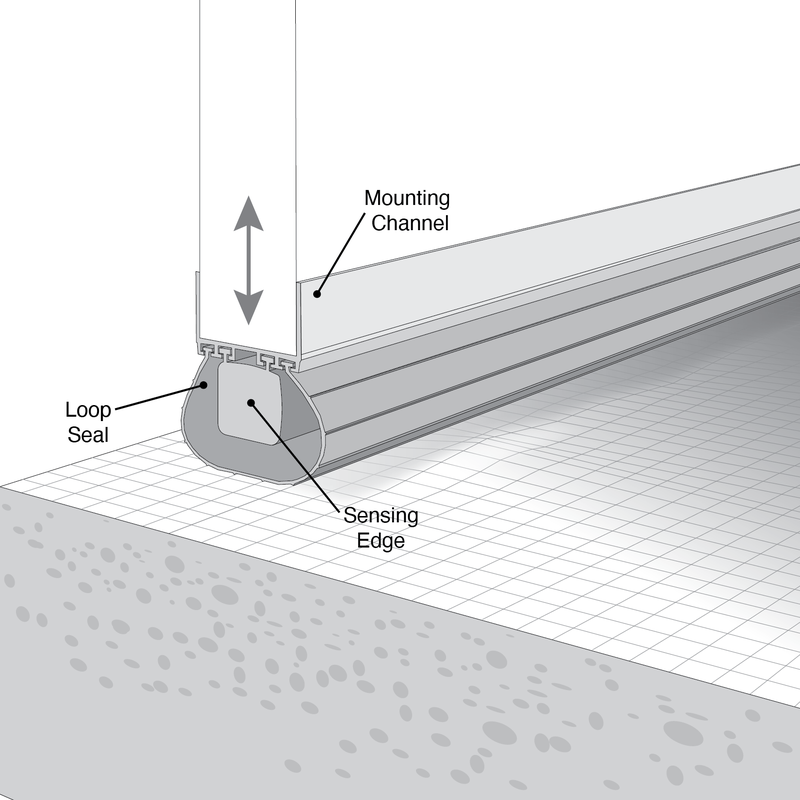
The Miller Edge ClimaGuard profile provides all the benefits of a sensing edge for sectional doors, but with an added layer of protection. The protective loop seal conforms to irregularities in the floor, preventing air infiltration and sealing out weather. ClimaGuard is made up of an ME112 sensing edge paired with a PVC loop seal that comes with a double slot mounting channel.
Sensing Edges for Pedestrian, Specialty & Other Industrial Door Systems
Other sensing edge profiles are available for:
- Revolving Doors
- Bifold doors
- Vertical lift doors
- Tilt-up doors
- Sliding doors
- Elevator doors
- Transit systems doors
- Cold storage doors
- Hangar doors
Because applications vary widely, edge dimensions, mounting styles, wiring configurations and jacket materials are often customized to match operational needs.
Benefits of Safety Edge Sensors
Safety edge sensors support both operational safety and equipment protection across many industries.
Improved Personnel Safety
Sensing edges help reduce the risk of injuries caused by closing doors or moving equipment.
Reduced Equipment Damage
By stopping a motion immediately after contact, edges can help prevent costly damage to doors, vehicles, products and machinery.
Support for UL 325 Compliance
Monitored sensing edges can help facilities meet current safety requirements for motorized doors and gates.
Reliable Performance in Harsh Environments
Many sensing edges are designed to withstand dust, debris, moisture and demanding industrial conditions. Models like the MC22 feature sealed assemblies and flexible vinyl construction for long-term durability.
How to Install Safety Edge Sensors on Automated Doors
Installation methods vary depending on the edge model and door configuration, but the overall process follows a similar structure.
Step 1: Disconnect Power
Before beginning installation, disconnect power to the operator and follow all lockout/tagout procedures. This helps prevent accidental door movement during installation.
Step 2: Inspect the Door
Examine the door’s leading edge configuration to determine the proper sensing edge and mounting method. Verify measurements carefully before cutting or fitting components.
Step 3: Install the Mounting Channel
For doors with double-angle bottom bars, installers may use a mounting system such as the MC22-C7.
The MC22-C7 allows installers to clip the channel directly onto the bottom bars without removing or loosening the existing assembly.
Typical installation steps include:
- Measure and cut the channel to match the full width of the bottom bar.
- Snap the channel assembly onto the door’s double-angle bottom bar until it locks into place.
- Attach the provided clips securely to the mounting channel.
This simplified installation process can help reduce labor time compared to traditional mounting methods.
Step 4: Install the Sensing Edge
Once the mounting channel is in place, slide the sensing edge into the retainer or mounting track.
For models like the MC22:
- The extruded T-profile slides into the channel
- The edge should fit securely across the entire width
- End flaps may be trimmed for a custom fit
Proper alignment is important to maintain consistent sensitivity across the full length of the door.
Step 5: Route and Secure Wiring
Lead wires should be routed carefully to avoid pinch points, abrasion or excessive tension.
Many installations use:
- Junction boxes
- Coil cords
- Retractable reels
Installation instructions for the MC22 recommend securing the lead wire to the door and properly sizing the coil cord to prevent interference during operation.
Always follow:
- Operator manufacturer requirements
- Local electrical codes
- National electrical standards
Step 6: Connect to the Operator Controls
Wire the sensing edge according to the operator manufacturer’s specifications.
The required monitored configuration may vary depending on the operator brand and control logic.
Because monitored systems can use different wiring configurations, compatibility verification is essential before startup.
Step 7: Test the System Thoroughly
After installation, test the sensing edge across the entire length of the door.
Verify that:
- Contact activates the edge properly
- The operator stops or reverses immediately
- Wiring remains secure during travel
- Monitoring functions operate correctly
Routine testing should continue after installation as part of regular preventive maintenance.
Miller Edge installation guidance recommends periodic inspections for cuts, water damage, loss of sensitivity or wiring issues.
Best Practices for Long-Term Performance
Safety edge systems perform best when paired with proper maintenance and regular inspection schedules.
Keep Edges Clean
Dust, debris and buildup can affect performance over time.
Inspect Wiring Regularly
Check coil cords, junction boxes and connection points for wear or damage.
Test Sensitivity Frequently
Routine compression testing helps confirm proper activation.
Replace Damaged Components Promptly
Cracked jackets, damaged wiring or failed monitoring circuits should be addressed immediately.
Preventive maintenance helps extend product life while supporting safer door operation.
Choosing the Right Safety Edge System
Selecting the correct sensing edge depends on several factors, including door type, leading edge configuration, operator compatibility, monitoring requirements, environmental conditions, and mounting preferences.
For rolling steel doors, systems like the MC22 combined with the MC22-C7 offer a streamlined solution designed for efficient installation and reliable entrapment protection.
The right sensing edge goes beyond compliance. It protects people, equipment and operations every time a door cycles. Contact us today to find the right monitored sensing edge solution for your facility.